Tehran suffered new blows today, hours before the end of a telegram from US President Donald Trump, who threatened to destroy essential infrastructure in Iran if there is no deal to reopen the Strait of Hormuz, which is critical to global oil supplies.
On the 39th day of the Israeli-American offensive, which has caused thousands of deaths in the Middle East, mainly in the Islamic Republic and Lebanon, where its ally Hezbollah operates from, Iranians are divided between fear and a certain indifference to the US president’s warnings.
“I am scared and all the people in this country must be too,” Metanet, a 27-year-old student who has lost a fellow student in an attack, tells Agence France-Presse. “Some people make fun of Trump and his threats,” but “it’s a war and there’s nothing funny about it.”
Mortezah Hamidi, a 62-year-old retiree, expresses “sadness and pessimism about Iran’s future” but shuns this new ultimatum that expires today at 8:00 p.m.p.m. Washington time (03:00 Wednesday GMT). Donald Trump “has changed so many dates that we are now immune to his threats,” he says.
Yesterday, Monday, Donald Trump warned that “the entire country could be destroyed overnight.” He said he is prepared to hit power plants and Iranian ports if the Islamic Republic does not lift the blockade of Hormuz – a Gulf sea route through which about 20 percent of the world’s oil passed before the war.
Calls for a diplomatic solution are growing in the region, even though Iran and the US yesterday rejected a mediation proposal put forward by several countries including Pakistan.
“The positive and constructive efforts made by Pakistan (…) to end the war are approaching a critical and sensitive stage,” Iran’s ambassador to Islamabad Reza Amiri Mogadam wrote in X without further elaboration.
Iranian Ambassador to Kuwait Mohammad Tutunji, for his part, called on Gulf countries to do everything they can to prevent a “tragedy”, in a statement to Agence France-Presse.
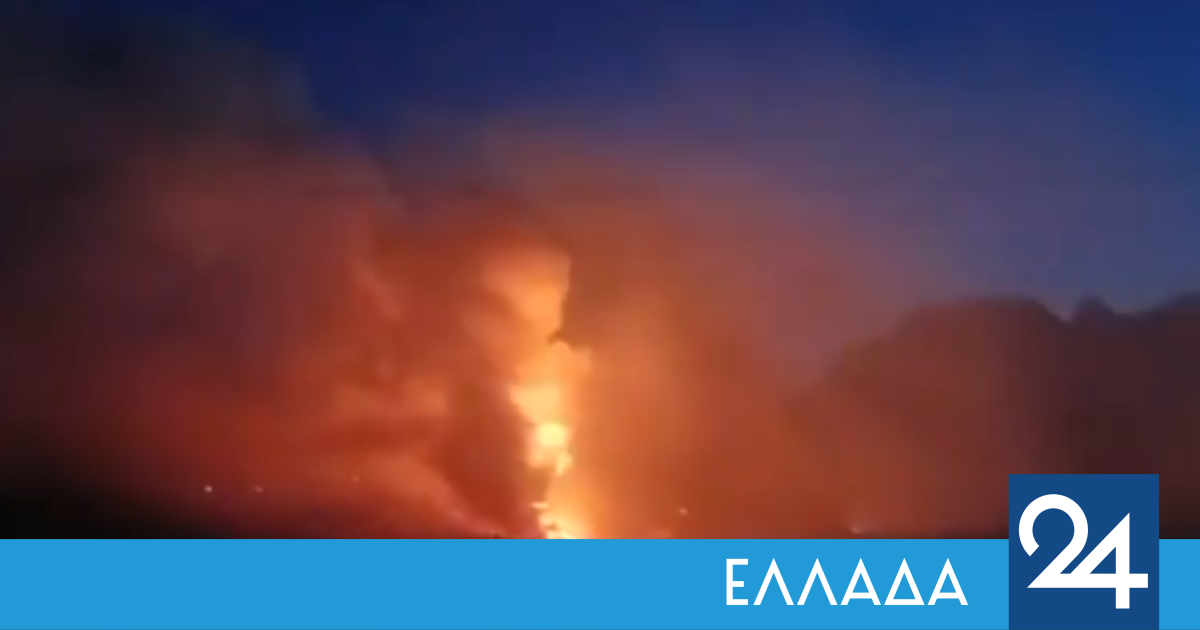
In the field, Tehran and the periphery of the Iranian capital have been rocked in recent hours by new explosions, according to Iranian media. A French News Agency reporter confirmed hearing a series of explosions from the northern part of the city.
The Israeli army said it had launched a “wave” of strikes aimed at “destroying” infrastructure in the capital and other parts of Iran. It urged Iranians to avoid traveling by train until 8:00 p.m. GMT, foreshadowing imminent strikes on the rail network.
Donald Trump said he is “not concerned” about the risk of committing war crimes if he destroys infrastructure used primarily for civilian purposes. For the US president, a “war crime” would be to allow Iran to obtain a nuclear weapon.
According to the US news website Axios, the mediators, the Pakistanis in particular, submitted the idea of a 45-day ceasefire.
The government-run Irna news agency reported, without specifying a source, that Iran rejected the proposal, demanding “an end to the conflict in the region, a protocol for safe passage through the Strait of Hormuz” as well as “reconstruction and the lifting of sanctions against Iran.”
The New York Times reported, citing two Iranian officials who requested anonymity, that the Islamic Republic is mainly seeking assurances that there will be no more attacks against it and that Israeli strikes against Hezbollah in southern Lebanon will stop.
In return, Iran is ready to lift the blockade of the Strait of Hormuz by imposing a two million dollar transit fee for each ship, a fee that Tehran will share with the Sultanate of Oman on the other side of the sea route.
It will use this revenue to rebuild infrastructure destroyed by Israeli-American strikes, rather than claiming direct reparations.
Donald Trump called the initiative “very important” but deemed it “not yet good enough for us to support it.”
For Sina Tuosi of the Washington-based Center for International Policy, there is little chance that the destruction of new infrastructure in Iran will cause a change in Tehran’s attitude because “the war has already crossed that line.” Iran will not “back down on its vital interests, notably control of the Strait of Hormuz, no matter what the price,” he writes in Dissident Foreign Policy.
In retaliation, he continues to strike daily at the Gulf countries he accuses of helping the United States.
A petrochemical complex located in Saudi Arabia was hit overnight by attacks, an eyewitness told Agence France-Presse, hours after strikes on similar facilities in Iran.
At least 18 people, including two children, were killed in airstrikes in a province near the Iranian capital, according to Iranian news agencies.
Another 24 residents of Alborz province were wounded, they said.
The Israeli-American bombing hit residential areas, the deputy governor of Alborz said. Rescue teams are working 24 hours a day, he added.
Also, an airport in western Iran was targeted by airstrikes, Mehr news agency reported today.
The airport in the city of Horamabad was bombed, according to Mehr, citing the deputy governor of Lorestan province, who said there were no casualties in the attack. The extent of the damage has not yet been determined.
.