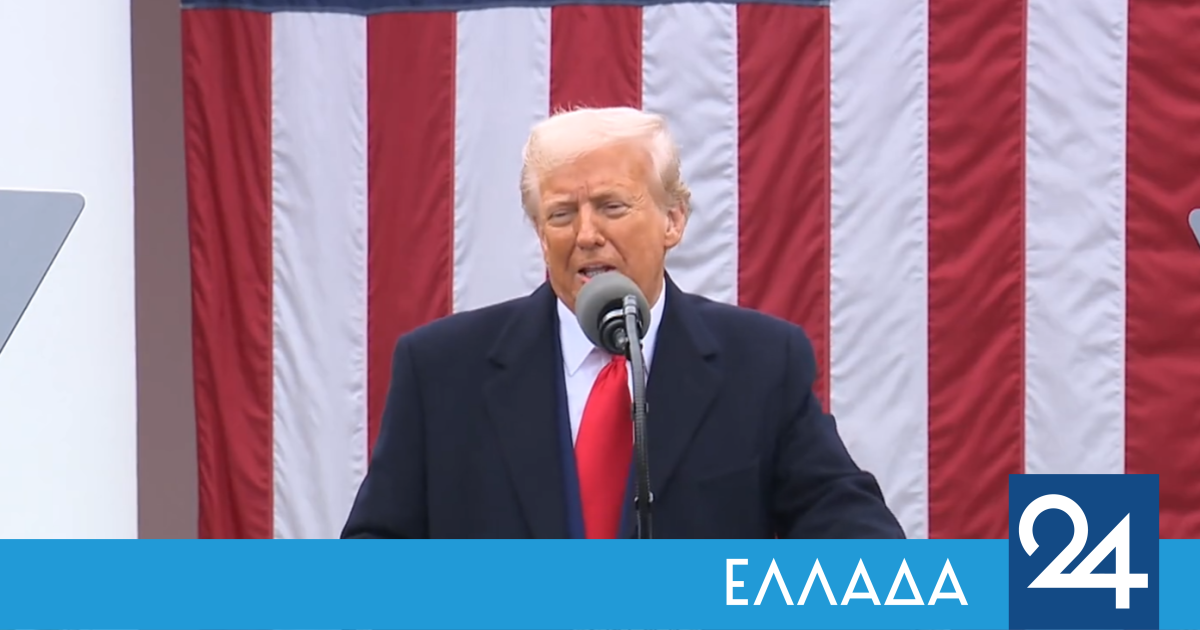
Donald Trump asserted last night that he believes a “deal” can be struck with Iran’s “new” leaders, since as he sees it the war the US and Israel launched against the Islamic Republic on February 28 resulted in “regime change” in Tehran, while Iranian attacks against Israel and Gulf states continue today.
The ongoing armed conflict has claimed thousands of lives, the vast majority of them in Iran and Lebanon, according to official accounts from states in the region, and there is no sign of it abating.
Nevertheless, the US President told the press last night that the successive executions of Iranian leaders, beginning with the country’s supreme leader Ali Khamenei, who was killed on the first day of the war, had resulted in de facto “regime change”.
“We are dealing with people completely different from anyone we have dealt with before,” he assured reporters, speaking of interlocutors “much more reasonable” than their predecessors — without mentioning any by name.
Donald Trump insisted he “sees a deal” with the “new” Iranian leaders that could be struck “soon.”
He also assured that Iran would in the coming days allow the safe passage of 20 oil tankers through the Strait of Hormuz, a strategic sea route through which one-fifth of the hydrocarbons destined for international markets normally pass, the de facto closure of which after the outbreak of the war sent black gold prices soaring.
Oil prices were rising in Asian markets ahead of the US president’s remarks.
Meanwhile, in an interview published last Sunday night in the digital edition of the Financial Times, US President Trump stressed that his military could “very easily” take control of Hargh Island, where oil infrastructure of strategic importance to Iran is located — through which about 90% of Iran’s crude exports pass, according to a recent note from US bank JP Morgan. The island was air-bombed in mid-March, without hitting the oil facilities.
The energy crisis may be further exacerbated by the entry into the war of Yemen’s Houthi rebels, allies of Iran, who said they launched two attacks on Saturday against Israel: could block traffic in the Bab al-Mandeb Strait, one of the world’s busiest.
With this backdrop, France is hosting a meeting of G7 finance and energy ministers later today to discuss the impact of the war on the economy.
Pakistan willing to host talks
A series of explosions were heard in Tehran on Sunday night, according to a French News Agency reporter. The Iranian Energy Ministry said there were power outages in the capital and its surroundings due to “attacks” on electricity infrastructure.
For its part, Israel, which announced last night that it had launched strikes against several targets in Iran, referred to “fragments” of a missile that fell on an industrial complex in its south after being targeted by the Revolutionary Guards, the Islamic Republic’s ideological army.
The Iranian armed forces continue to launch strikes in retaliation against US interests, including particularly economic ones, in the Gulf region.
In Kuwait, a desalination and power generation plant was attacked by Iranian forces resulting in “the death of an Indian worker and extensive property damage,” according to the small emirate’s government. Yesterday, ten military personnel were wounded in an attack on an armed forces facility, according to the country’s general staff.
Saudi Arabia’s Ministry of Defense announced in the early hours of this morning the interception of five ballistic missiles heading towards the eastern part of the Sunni kingdom.
Meanwhile, diplomatic efforts are continuing to find a way to end the war, which has now entered its second month.
The Pakistani government said yesterday it was willing to “host and facilitate, in the coming days, important talks” between officials in Washington and Tehran to bring about a “comprehensive and lasting resolution of the conflict” with the support of the UN and China.
Pakistani Foreign Minister Ishaq Dar made the statement after receiving his counterparts from Saudi Arabia, Egypt and Turkey in Islamabad.
Sea Operations;
Meanwhile, the scenario of a possible deployment of US forces on the ground in Iran continues, something US President Trump is leaving open.
The arrival of the USS Tripoli was announced on Friday. The helicopter-carrier (capable of carrying twenty F-35s, capable of vertical dismounts) and landing craft has been put in charge of a strike group with “approximately 3,500” Navy and Marine Corps men.
“The enemy is sending public messages for negotiation and dialogue while working on secret plans for a ground offensive,” Iranian parliament speaker Mohammad Bayr Galibaf has denounced.
Before warning: “our men are awaiting the arrival of the US military” and will “punish” them, as well as “all their allies in the region once and for all.”
Iran’s new supreme leader Mojtaba Khamenei, his father’s successor who has not made a public appearance since he rose to the position, thanked the religious leadership and the people of Iraq for their support in the face of the US-Israeli “offensive”.
Mojtaba Khamenei expressed himself in a written message broadcast by Iranian media. His absence from the spotlight is fueling scenarios — U.S. President Trump has gone so far as to question whether he is alive.
Meanwhile in Lebanon, the second front of the war, where Israel is bombing and fighting the Iranian-affiliated Hezbollah movement, a UN cyborg was killed when a missile of “unknown” origin exploded in the south.
Prime Minister Benjamin Netanyahu has ordered Israel’s military to expand its “security zone” under its occupation in southern Lebanon.
Overnight, Prime Minister Netanyahu secured approval from the Knesset, the Israeli parliament, of a new draft state budget for 2026 that increases military spending by 30 billion shekels (roughly 8.3 billion shekels). €8.8 billion), to 850 billion shekels, or about €235 billion.